📍 Atlas Mountains, Morocco

Atlas Mountains: Explore Morocco's Majestic Peaks

Rising dramatically above Marrakech, North Africa's highest mountain range offers everything from peaceful Berber villages to adrenaline-pumping adventures. Whether you have a single day or a full week, this is Morocco at its most awe-inspiring.

One Tour. Five Valleys. Endless Memories.

The All Inclusive Atlas Mountains & 5 Valleys Day Tour from Marrakech is the ultimate way to experience Morocco's most iconic mountain region without any hassle. Whisked from Marrakech in comfort, you'll thread through five distinct valleys — Ourika, Oukaimeden, Sidi Fares, Asni, and Tahnaout — each with its own character, landscapes, and stories. A traditional Berber lunch in Sidi Fares valley is the centrepiece of the day, grounding the adventure in authentic local hospitality. With transport, meals, and a knowledgeable guide all covered, all you need to do is show up and soak it all in.

  • Visit all five famous valleys: Ourika, Oukaimeden, Sidi Fares, Asni & Tahnaout
  • Savour a traditional Berber lunch included in Sidi Fares valley
  • Fully guided with hotel pickup and drop-off from Marrakech
  • Immerse yourself in authentic Amazigh (Berber) culture and village life
  • Stunning High Atlas scenery with snow-capped peaks and lush river gorges
Book Now
⭐ Top Rated All Inclusive Atlas Mountains & 5 Valleys Day Tour from Marrakech

Where Are the Atlas Mountains & What to Expect

Stretching across Morocco, Algeria, and Tunisia, this vast range separates the Mediterranean coastline from the vast Sahara. For most visitors, the Moroccan High Atlas — just an hour from Marrakech — is the gateway to an unforgettable highland world.

The range spans roughly 2,500 kilometres across North Africa, but the High Atlas section in Morocco holds the most dramatic scenery and the region's highest summits. The Toubkal Massif, the Ourika Valley, and the Ait Benhaddou corridor are the most visited corridors. Rugged pistes connect remote villages where mule tracks still outnumber tarmac roads, and the air carries the scent of cedar and wild thyme. Altitude varies enormously, giving rise to wildly different microclimates within just a few kilometres of driving.

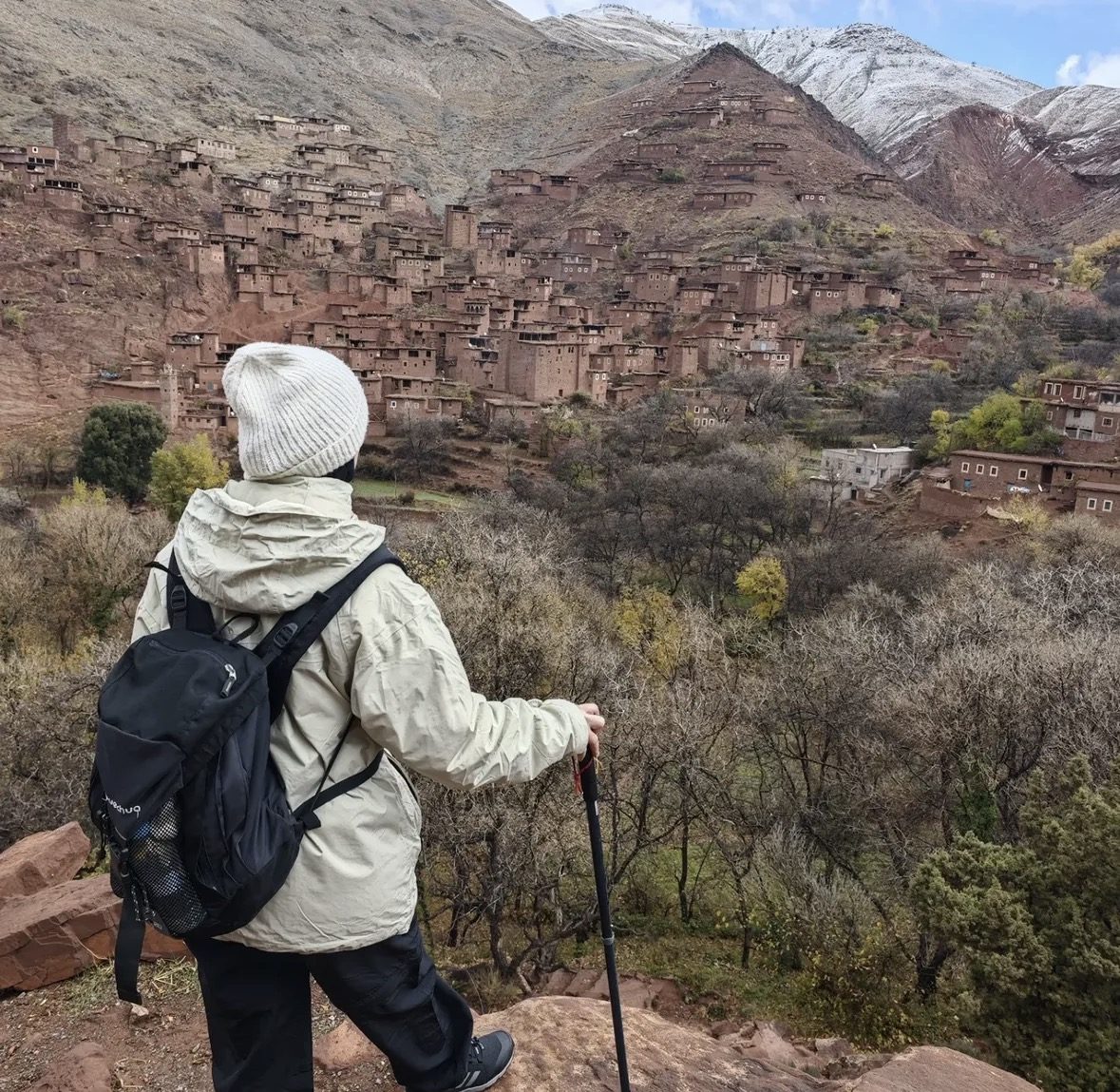
Human settlement here stretches back thousands of years. The indigenous Amazigh (Berber) people built terraced farms, kasbahs, and trading routes long before Arab influence arrived in the seventh century. French colonial engineers later punched roads through the passes, opening valleys that had been almost entirely isolated. Today those same valleys retain a remarkable cultural authenticity — weekly souks, hand-woven rugs, and traditional mud-brick architecture tell stories that predate written Moroccan history by centuries.

Visitors stepping into this landscape for the first time are consistently surprised by its scale and variety. A single day can take you from orange groves at 600 metres to snow-dusted ridgelines above 3,000 metres. Roadside stalls sell argan oil, saffron, and rose water. Families invite strangers in for mint tea. The hospitality of the mountain communities is as legendary as the scenery itself, making every excursion feel like a genuine cultural encounter rather than a tick-box sightseeing trip.

🏔️
Highest Peak 4,167 m (Toubkal)
📏
Range Length ~2,500 km
🌍
Countries Covered Morocco, Algeria, Tunisia
🕐
Drive from Marrakech ~1 hour
🌡️
Summer Peak Temp ~28°C (valley floors)
❄️
Ski Season December – March
🏔️
4,167 m
Roof of North Africa

Mount Toubkal is the highest peak in North Africa and the second highest in the Arab world. On a clear day the summit panorama stretches from the Sahara to the Atlantic coast.

🧑‍🤝‍🧑
3M+
Amazigh Inhabitants

More than three million Berber people call the Moroccan highlands home, preserving a language, architecture, and cuisine distinct from lowland Arab Morocco. Their mudbrick villages are as photogenic as any mountain scenery.

🎿
1 Resort
Africa's Oldest Ski Resort

Oukaïmeden sits at 2,600 m and has been welcoming skiers since 1930, making atlas mountains skiing a surprisingly well-established pursuit. Slopes suit beginners through intermediates, with breathtaking high-altitude vistas.

🌿
300+
Endemic Plant Species

The range shelters hundreds of plant species found nowhere else on Earth, from Atlas cedar forests to wild lavender meadows. Botanists and nature lovers find rich rewards across every season.

🦅
450+
Bird Species Recorded

Raptors including Bonelli's eagle and Lammergeier soar on thermals above the gorges, while lower valleys teem with migrant warblers every spring and autumn. Birdwatching draws dedicated enthusiasts from across Europe.

🗺️
1960
Year of Modern Trekking Fame

The first recorded ascent of Toubkal dates to 1923, but organised trekking really took off in the 1960s as European adventurers discovered the range. Today it hosts tens of thousands of trekkers annually.

🥾

Trekking & Mountaineering

Atlas mountains trekking Morocco offers routes for every fitness level, from gentle valley walks to the demanding two-day ascent of Toubkal. Licensed mountain guides are mandatory above certain altitudes and add enormous value to any trek.

🚙

4x4 Adventure Tours

An atlas mountains 4x4 adventure tour plunges you into hidden valleys and high passes that normal vehicles simply cannot reach. These off-road experiences are ideal for travellers who want maximum terrain variety in a single day.

🏍️

Motorcycle Tours

An atlas mountains motorcycle tour along the dramatic Route des Kasbahs is one of North Africa's great riding experiences. Sweeping bends, mountain passes, and almost zero traffic make this a dream for two-wheeled adventurers.

🎿

Skiing at Oukaïmeden

Atlas mountains skiing at Oukaïmeden is a unique experience — hire gear on the slopes, take a drag lift, and enjoy powder snow with a Saharan horizon in the distance. The season runs roughly December through March.

🌅

Sahara Desert Combo

An atlas mountains and Sahara desert tour combines two of Morocco's most iconic landscapes in one epic journey, typically crossing the High Atlas via the Tizi n'Tichka pass before descending toward the dunes of Merzouga.

🏘️

Berber Village Cultural Walks

Guided walks through living Berber communities reveal traditional bread ovens, carpet-weaving workshops, and weekly souks that have changed little in centuries. These half-day experiences complement any larger excursion perfectly.

How Atlas Mountains Compares to Similar Destinations

Weighing up mountain destinations for your Morocco or North Africa trip? Here's how the range stacks up against comparable adventures.

Choosing a mountain destination involves balancing crowd levels, cost, accessibility, and the depth of cultural experience on offer. The Atlas Mountains sit in an exceptionally competitive space — rivalling iconic ranges in southern Europe and the Middle East for scenery, yet offering a uniquely African cultural immersion. This table is designed to help you see at a glance how each destination performs across the factors that matter most to independent and guided travellers alike.

CrowdsPriceBest ForWhat Sets It Apart
★ Atlas MountainsLow–ModerateBudget–Mid RangeCulture, Trekking, AdventureBerber villages, Sahara proximity, 1hr from Marrakech
Swiss AlpsVery HighExpensiveSkiing, Luxury ResortsWorld-class infrastructure and iconic peaks
Troodos Mountains (Cyprus)LowBudgetRelaxed Hiking, Wine TourismMonasteries and vineyards at altitude
Anti-Lebanon Range (Jordan/Lebanon)LowBudget–Mid RangeOff-the-beaten-path TrekkingAncient ruins and dramatic gorges

The Swiss Alps win on polish and the Anti-Lebanon on remote mystique, but neither delivers the extraordinary cultural layering you get in Morocco's high country. The Atlas Mountains uniquely combine genuine Berber heritage, jaw-dropping landscapes, budget-friendly tours, and rapid access from a major international city — making them the standout choice for travellers who refuse to choose between adventure and authentic human connection.

Atlas Mountains Everything You Need to Know

Everything you need to plan a seamless, memorable trip to Morocco's greatest highland destination.

How to Get to the Atlas Mountains from Marrakech

Marrakech Menara Airport (RAK) is the primary international gateway, served by direct flights from dozens of European cities as well as major Middle Eastern hubs. The airport sits about 5 km from the medina, from where private transfers, taxis, or pre-booked tour vehicles will carry you toward the mountains. The drive from central Marrakech to the foothills takes roughly 45–60 minutes on the N9 highway, making visiting atlas mountains from Marrakech genuinely easy even on a tight schedule.

Once in the mountains, options narrow considerably. Public minibuses (grands taxis) connect Marrakech with Asni, Imlil, and Ourika Valley on fixed routes, but schedules are irregular and luggage space is limited. For flexibility, an atlas mountains private day trip with a dedicated driver is far more practical — it lets you stop at viewpoints, villages, and roadside stalls whenever you choose rather than being tied to a timetable.

  • ✈️ Fly into Marrakech Menara Airport (RAK) — the closest international hub
  • 🚗 Private transfers from Marrakech city centre take 45–60 min to the foothills
  • 🚌 Grands taxis run from Bab Doukkala to Asni, Imlil, and Ourika daily
  • 🏍️ Rental cars and motorcycles available in Marrakech; an international licence is required
  • 🚐 Shared minibuses serve major valley towns but depart when full, not on schedule
  • 🗺️ GPS coverage is patchy above 2,000 m — download offline maps before you leave
  • 🛻 Tour operators offer 4x4 pickups directly from your Marrakech riad or hotel
A 4x4 vehicle climbing a mountain pass road in Morocco with dramatic Atlas range scenery behind

Best Time to Visit the Atlas Mountains by Season

Spring (March–May) and autumn (September–November) are universally considered the prime windows. Temperatures are mild at valley level — typically 18–25°C — wildflowers carpet the hillsides, and the higher trails are free of serious snow. Trekking conditions are at their finest, visibility is excellent for photography, and the almond and cherry blossom in March adds an almost surreal beauty to the lower valleys.

Summer brings intense heat to the valley floors (sometimes above 35°C) but remains pleasant above 2,000 metres. Winter transforms the high passes into a snowy wonderland, ideal for atlas mountains skiing at Oukaïmeden but potentially hazardous for high-altitude trekking without specialist equipment. The range receives most of its precipitation between November and March, primarily as snow above 2,500 metres and rain lower down.

  • 🌸 March–May: Best overall — mild temps, wildflowers, low crowds
  • ☀️ June–August: Hot in valleys but ideal for high-altitude trekking above 2,000 m
  • 🍂 September–November: Excellent visibility, harvest festivals, comfortable temperatures
  • ❄️ December–February: Ski season at Oukaïmeden; Toubkal requires crampons and ice axe
  • 🌧️ November–March: Main rainfall and snowfall season across the range
  • 🥵 Avoid mid-August valley day trips — temperatures can exceed 38°C on the road
  • 🌙 Ramadan travel is culturally rich but some local cafés and guides may adjust hours
Spring wildflowers blooming on Atlas range hillsides with snow-capped peaks in the background

What to Pack for Your Atlas Mountains Trip

Layering is the golden rule. Even in summer, temperatures can drop sharply after sunset above 2,000 metres, and a warm fleece or down jacket is essential for anyone venturing onto the high trails. On a standard atlas mountains day trip, light trousers, a sun hat, and a windproof layer will cover most scenarios. Serious trekkers should add technical gear appropriate to the season and planned altitude.

Footwear is non-negotiable: sturdy ankle-supporting trail shoes or boots are vital on rocky paths. Sandals are fine in villages and valley cafés but dangerous on scree. Sun protection is critical at altitude — UV intensity increases roughly 10% per 1,000 metres. Pack a high-SPF sunscreen, UV-blocking sunglasses, and lip balm. A small daypack with a 1.5-litre water capacity is sufficient for most half-day walks.

  • 🧥 Warm fleece or light down jacket — evenings above 2,000 m are cold year-round
  • 👟 Sturdy ankle-support trail shoes or hiking boots — mandatory for trekking routes
  • 🧴 SPF 50+ sunscreen and UV-blocking sunglasses — altitude amplifies UV exposure
  • 💧 Reusable water bottle — fill up in villages or carry 2 litres minimum for treks
  • 🎒 Small daypack (20–25 litres) for summit attempts or full-day hikes
  • 🧣 Lightweight scarf or buff — useful for sun, dust, and cold mountain winds
  • 💊 Basic first-aid kit including blister plasters, ibuprofen, and altitude headache tablets
  • 📵 Offline map app (Maps.me or Google Maps offline) — mobile signal is unreliable above 2,000 m
Hiker's boots and backpack on a rocky High Atlas trail with mountain panorama beyond

Local Tips: Culture, Etiquette & Practical Advice

The mountain communities are predominantly conservative Muslim Berber families. Dress modestly outside resort areas — covered shoulders and knees show respect and will earn noticeably warmer hospitality. Always ask before photographing people, especially women and children. Accepting a glass of mint tea when offered is a social courtesy; refusing without a polite explanation can cause mild offence. Learning a few words of Tachelhit (Berber) or Darija (Moroccan Arabic) delights locals enormously.

Cash is king throughout the mountain region — ATMs are available in Asni and Imlil but often run dry on busy weekends. Budget around 50–100 MAD for a village lunch, and agree on taxi or mule prices before departure to avoid confusion. Guides expect a tip of roughly 100–200 MAD per day in addition to their fee. Local argan cooperatives sell at fair prices and directly benefit women's collectives — a more ethical purchase than souks in the city.

  • 🫖 Always accept mint tea when offered — refusing is seen as impolite
  • 📷 Ask permission before photographing locals — offer a small tip if they agree
  • 👗 Cover shoulders and knees in villages, especially during prayer times
  • 💵 Carry cash in Moroccan dirhams — card payment is almost non-existent in villages
  • 🤝 Agree on mule, guide, and taxi prices before the journey, not after
  • 🌿 Buy argan and saffron from women's cooperatives for fair-trade, quality-assured products
  • 📞 Save your tour operator's local number — mountain mobile coverage is patchy but does exist at passes
Berber woman serving mint tea in a traditional mountain guesthouse in Morocco

Health & Safety Essentials for Mountain Travel

No vaccinations are specifically required for Morocco, but it is wise to be up to date on routine jabs (tetanus, hepatitis A, typhoid) before any trip. Altitude sickness is the primary health risk for trekkers above 3,000 metres — ascend gradually, drink at least three litres of water per day on the mountain, and descend immediately if symptoms worsen beyond a mild headache. Tap water in mountain villages is generally untreated; stick to bottled or filtered water.

The mountains are statistically very safe for tourists, but landslides can close passes after heavy rain and flash floods are a real risk in narrow gorges between November and March. Always inform your accommodation or operator of your planned route. Emergency mountain rescue is coordinated via the Gendarmerie Royale — the number is 177. Travel insurance that specifically covers high-altitude trekking and emergency helicopter evacuation is strongly recommended for any multi-day route above 3,000 metres.

  • 💉 Update routine vaccinations (tetanus, Hep A, typhoid) before travelling to Morocco
  • 🤕 Altitude sickness risk rises above 3,000 m — ascend slowly and rest on arrival at high camps
  • 💧 Drink 3+ litres of water daily on trekking days; avoid untreated tap water in remote villages
  • 🌧️ Check weather forecasts before entering gorges — flash floods occur November–March
  • 🏥 Nearest hospital is in Marrakech — carry a basic first-aid kit and any personal medications
  • 📞 Mountain rescue: Gendarmerie Royale emergency line 177; save it before you set off
  • 🛡️ Buy travel insurance covering high-altitude trekking and helicopter evacuation before you fly
Mountain rescue helicopter flying over snowy High Atlas peaks in Morocco

All Tours

Combine your mountain adventure with these unmissable Morocco experiences just a short drive away.

Atlas Mountains What Visitors Are Saying

Travellers share their unforgettable experiences exploring the Atlas Mountains on guided tours, treks, and private excursions.

★★★★★

"Our private day trip from Marrakech into the High Atlas was absolutely breathtaking. The valleys were lush, the Berber villages felt genuinely welcoming, and our guide explained so much about local culture and history. We visited a traditional home, sipped mint tea with a local family, and still had time to hike to a stunning viewpoint. I can't recommend this experience highly enough — it was the highlight of our entire Morocco trip."

SR
Sophie R.March 2025
★★★★★

"We booked an atlas mountains 4x4 adventure tour and it exceeded every expectation. Our driver navigated rocky pistes with total confidence while we enjoyed jaw-dropping scenery that no standard vehicle could ever reach. Stopping at a remote Berber settlement for lunch felt completely authentic and unhurried. If you want to go beyond the tourist trail, this is the only way to do it."

MT
Marcus T.January 2025
★★★★☆

"I joined an atlas mountains day trip from Marrakech as a solo traveller and was pleasantly surprised by how small the group was — just six of us. The Ourika Valley stop was gorgeous and the waterfall hike was refreshing, though I wished we had slightly more time there. Our guide was knowledgeable and patient with all our questions. Overall a fantastic value day out from the city."

LB
Lena B.November 2024
★★★★★

"The atlas mountains trekking morocco experience we chose was perfectly paced for our mixed-ability group. We trekked through cedar forests, crossed shepherd trails, and watched the sun set behind Mount Toubkal from our mountain lodge. The accommodation was simple but cosy, with incredible home-cooked Berber meals each evening. This multi-day trek is genuinely one of the most rewarding things I have ever done."

JO
James O.October 2024
★★★★★

"We opted for one of the atlas mountains private tours for our honeymoon and it was pure magic. Everything was tailored to us — the pace, the stops, even the picnic lunch in a wildflower meadow. Our guide was warm, funny, and deeply knowledgeable about Amazigh traditions. The scenery shifted so dramatically from red rock gorges to green valleys that we were constantly reaching for our cameras."

AW
Amelia W.April 2025
★★★★☆

"I came specifically for atlas mountains skiing at Oukaïmeden and had a wonderful long weekend. The slopes are not as extensive as the Alps, but the setting — with views stretching toward the Sahara on clear days — is completely unique. Hiring equipment on-site was straightforward and affordable. The drive up from Marrakech alone is worth the journey."

PN
Pierre N.February 2025
★★★★★

"Our atlas mountains and sahara desert tour was simply epic — four days that felt like a month of memories. We wound through high passes, overnighted in a kasbah, watched the desert stars from the dunes, and returned through the Drâa Valley. The organisation was flawless and our guide spoke excellent English while clearly loving every kilometre of the route. Truly the best road trip of my life."

RK
Rachel K.December 2024
★★★★★

"I did the atlas mountains motorcycle tour and it was an absolute dream for any rider. The switchbacks climbing through the Tizi n'Tichka pass are thrilling and the views from the top are staggering. Our lead rider knew exactly where to stop for photos and where to find the best roadside argan oil cooperative. If you ride and you're coming to Morocco, do not skip this."

DF
Daniel F.September 2024

Watch the Atlas Mountains Come Alive

See the soaring peaks, vibrant Berber villages, and dramatic desert edges for yourself before you book.

Video thumbnail showing drone footage of snow-capped Atlas Mountains peaks above Marrakech, Morocco

Find the Atlas Mountains

The High Atlas range begins approximately 60 km south of Marrakech city centre, with the village of Imlil (31.1384° N, 7.9155° W) serving as the main trekking base for the Toubkal Massif.

Atlas Mountains Frequently Asked Questions

Everything you need to know before booking your Atlas Mountains tour, trek, or day trip from Marrakech.

The foothills begin roughly 20 kilometres south of Marrakech city centre, making this one of the most accessible mountain ranges from any major city in the world. The popular Ourika Valley is about a one-hour drive, while the higher passes and villages can take 90 minutes to two hours depending on your destination. Most day trips depart early in the morning to maximise time in the mountains before returning in the evening.
Spring (March to May) and autumn (September to November) offer the most comfortable temperatures and stunning scenery, with wildflowers in spring and golden foliage in autumn. Summer is warm in the valleys but pleasantly cool at altitude, making it ideal for trekking. Winter brings snow to the higher elevations, creating beautiful landscapes and ski conditions at Oukaïmeden resort. Each season offers a genuinely different and rewarding experience.
Most standard day excursions involve only light walking on well-maintained paths, so a basic level of fitness is sufficient. Operators typically offer itineraries graded from easy valley strolls to more demanding summit hikes, so you can choose what suits you. If you plan multi-day atlas mountains trekking morocco routes or a summit attempt of Mount Toubkal, a higher fitness level and proper hiking boots are strongly recommended. Always let your operator know your experience level when booking so they can advise accordingly.
Layers are essential regardless of the season, as temperatures can drop significantly at altitude even on warm days. Comfortable walking shoes, sun protection, a refillable water bottle, and a light rain jacket are key items. It is also worth bringing some cash in Moroccan dirhams for small purchases at village markets or roadside stalls. Respectful, modest clothing is appreciated when visiting Berber communities along the route.
For families, couples, or small groups, a private tour is almost always worth the additional investment because the itinerary is built entirely around your interests and pace. You avoid waiting for other guests, can linger at spots you love, and benefit from a more personalised relationship with your guide. Private tours also allow you to request specific activities such as a cooking class, mule trekking, or a visit to a particular village. Many travellers find it genuinely better value when split among four or more people.
These tours use purpose-built off-road vehicles to access remote pistes, riverbeds, and high-altitude tracks that ordinary cars cannot reach. They suit adventurous travellers who want to explore beyond the standard tourist routes and discover hidden Berber hamlets, dramatic gorges, and panoramic ridgelines. No driving experience is required — a professional local driver handles the vehicle throughout. The experience is suitable for most ages and does not require any physical fitness beyond the ability to handle mild vibration on rough tracks.
Oukaïmeden, located about 74 kilometres from Marrakech, is North Africa's highest ski resort and offers slopes suitable for beginners and intermediates. Ski and snowboard equipment can be hired on site at reasonable prices, and lessons are available from local instructors. The season typically runs from December through March, though snowfall can vary year to year. Even non-skiers often enjoy the trip up simply for the dramatic winter scenery and the novelty of being on a snowy mountaintop so close to the Sahara.
Absolutely — the atlas mountains and sahara desert tour is one of the most popular itineraries in Morocco for good reason. Travelling south through the High Atlas passes, you descend into the pre-Saharan valley towns of Ouarzazate, Drâa, and Merzouga, where the famous Erg Chebbi dunes await. Most combined tours run between three and six days, offering a dramatic contrast of landscapes, climates, and cultures. Booking through a reputable operator ensures comfortable logistics and knowledgeable guides for the entire journey.
Always ask permission before photographing local people, particularly women and children, and accept a polite refusal graciously. Accepting an offer of mint tea is considered good manners and a sign of respect for Amazigh hospitality. Dress modestly — covered shoulders and knees are appreciated in village settings. Small purchases of local crafts, honey, or argan oil products directly support community livelihoods and are a meaningful way to give back.
Start by considering your available time: a single day suits the Ourika Valley or Imlil, while two or more days open up trekking routes, waterfalls, and remote kasbahs. Think about your preferred activity level — a leisurely cultural tour differs greatly from a guided summit attempt. Reading recent traveller reviews and checking whether the operator uses licensed, English-speaking guides is essential for safety and enjoyment. Booking directly with a specialist or through a trusted platform with clear cancellation policies gives you the most confidence.

Ready to trade the medina crowds for mountain air?

Book Your Trip Now

A History of the Atlas Mountains Across the Ages

From the ancient Amazigh kingdoms that carved terraced farms into sheer valley walls to French colonial engineers who blasted roads through the passes, the human story of these mountains spans millennia. Legends of the Titan Atlas, Berber resistance to Roman legions, and the great medieval salt and gold caravans all converge in this extraordinary landscape.

📅 Book Now